A beautiful blue vase

A beautiful blue vase
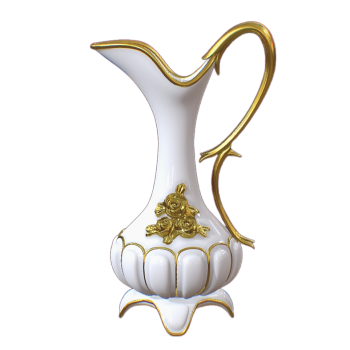
Gold inlaid art vase

Gold inlaid art vase

3D design vase

3D design vase

Japanese silver enamel vase

Japanese silver enamel vase

Japanese silver enamel vase is a traditional handicraft that combines art and craftsmanship. This type of vase is usually made of copper or silver and covered with a layer of enamel glaze. After high-temperature firing, it forms a smooth and shiny surface. Enamel has rich colors and diverse patterns, commonly featuring traditional Japanese elements such as flowers, birds, landscapes, and figures. Silver wire craftsmanship outlines delicate lines on enamel, adding a sense of three dimensionality and artistic beauty. The Meiji era (1868-1912) was the peak period of the development of enamel craftsmanship in Japan, and works from this period were particularly favored by collectors.
Cleveland Museum of Art Silverware - Vase
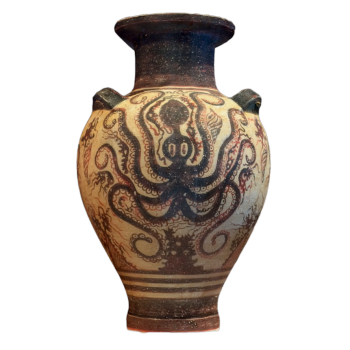
Cleveland Museum of Art Silverware - Vase

The silverware collected by the Cleveland Museum of Art, made in about 700 AD, is from Central Asia or Xizang and belongs to the early works of the eighth century. Made of silver and decorated with gold plating, presenting a magnificent appearance. Showcased the creator's exquisite craftsmanship and delicate skills. The specific purpose is still unknown, but they may have been used as decorations for religious ceremonies or aristocratic residences. The design and decoration of the utensils used complex geometry, animal and plant patterns and character images, which showed the cultural characteristics and artistic style of Central Asia or Xizang at that time. It is the Cleveland Museum of Art through J H. One of the important collectibles purchased by the Wade Fund.
Minoan vase

Minoan vase

The Minoan vase is a ceramic artwork from the Minoan period of ancient Greek civilization, which existed approximately between 2600 BC and 1100 BC. The Minoan civilization is one of the earliest civilizations in ancient Greece, mainly located on the island of Crete and later on the Greek mainland. The Minoan vase is an important symbol of cultural and artistic achievements during this period. The Minoan vase is renowned for its exquisite craftsmanship and decoration. They usually have smooth lines and elegant forms, decorated with complex geometric patterns, marine creatures, plants, and mythological scenes.
Marble low polygonal vase

Marble low polygonal vase

The low polygonal marble vase is a reflection of modern art and design trends, combining classical materials with modern technology. Low polygon design typically refers to using fewer geometric polygons to create a 3D model of an object's surface. This design style is visually simple and modern, often used in games, graphic design, and modern art. Marble is a popular material for sculpture and architectural decoration, known for its unique texture, color, and texture. Marble low polygonal vases may mimic the appearance of marble in design, but presented in a low polygonal style.
Vase made by Edward Knopfflin (Part 1)

Vase made by Edward Knopfflin (Part 1)

The vase made by Edward Knopfflin is an exquisite fine porcelain artwork, created between 1902 and 1916, produced in Palatine, France. Overall, the vase has a flat bottom, slightly expanded middle, rounded top, and then extends upwards to form a higher neck, ending with a wide edge. Two handles decorated with reed patterns connect the middle and upper ends of the neck. In terms of decoration, the vase adopts a hollow design inspired by plants, with green and orange pink as the main colors, and is also decorated with two three-dimensional crayfish. It is one of the collections of the Parthenon Museum of Art and History.
Vase made by Edward Knopfflin (Part 2)

Vase made by Edward Knopfflin (Part 2)

The decorative vase made by Edward Knopfflin is an exquisite fine porcelain artwork, created between 1902 and 1916, produced in Paltenay, France. The main body of the vase is decorated with two oval reliefs, including a white high relief female side image, connected by two deep green flower garlands. In addition, the neck and base are striped and adorned with light reddish brown dots. The two handles connecting the neck and the top of the bottle are placed on two decorative pieces shaped like a ram's head. The color scheme of the entire vase ranges from shallow green to deep green, as well as old rose, white, and ochre. It is a collection of the Parthenone Museum of Art and History.
Terracotta railing vase

Terracotta railing vase

It is an oval shaped red clay pottery with carved images of women and Cupid on the surface, and the base is made of white marble. This work is a rare and pure masterpiece by French sculptor Claude Michel, also known as "Clodion". Clodion is known for the provocative nature of his classical style works. It was one of the last items purchased by Sir James Erskine during his great trip to Italy from 1821 to 1822. Erskine's collection now forms part of the Denimare Collection, which is exhibited at the Duff Mansion. The Dufu Mansion is a historic building that houses a rich collection of artworks.
Caron bottle

Caron bottle

Caron bottles were very popular in Ming Dynasty China, and during this period, Chinese ceramic craftsmanship was highly developed, producing many exquisite ceramic artworks. The design of Karon bottles usually features elegant contours and exquisite decorations. They may have intricate carvings or reliefs, as well as painted patterns, reflecting the artistic style and aesthetics of the time. These vases were usually used as decorations or for storing spices, powders, etc., so they played an important role in daily life during the Ming Dynasty. Caron bottles were very popular in Ming Dynasty China, and during this period, Chinese ceramic craftsmanship was highly developed, producing many exquisite ceramic artworks.
Greek Vase

Greek Vase

Greek vases are very famous works of art in ancient Greek civilization, not only as daily necessities, but also as symbols of art and culture. Greek vases are commonly used to store liquids such as oil, wine, or water, and are also used as burial objects for funerals. They are often decorated with mythological stories, daily life scenes, and geometric patterns, reflecting the artistic aesthetics and cultural beliefs of ancient Greeks. Greek vases are made of clay and coated with a smooth glaze called "talc" on the surface. Formed by hand or wheel, and then fired at high temperatures. Decorative techniques include the drawing of black or red patterns, known as "black painting" and "red painting".
Enamel vase

Enamel vase

Decorative vase

Decorative vase

Decorative vases are containers primarily used to beautify the environment and enhance the artistic atmosphere of a space. They can be made of various materials such as ceramics, glass, metal, or plastic, and are known for their unique design, color, and shape. The design of decorative vases usually focuses on appearance, aiming to serve as a display of art and add beauty to interior decoration. There are various styles of decorative vases, ranging from classical to modern, from East to West, covering almost all artistic styles. Decorative vases are containers primarily used to beautify the environment and enhance the artistic atmosphere of a space. They can be made of various materials.
Aztec vase

Aztec vase

The Aztec vase is one of the rich cultural heritages of the Aztec civilization, which was particularly prominent in the post classical period of central Mexico. The Aztecs were skilled in pottery art, and their vases were both practical and ceremonial, often depicting complex patterns of black, red, and orange, depicting myths, wars, or everyday life scenes. These vases are not only containers, but also carry important cultural and religious meanings, often used in ceremonies and celebrations. The Aztecs had advanced ceramic technology, using the "sliding" technique to coat the surface of pottery with colored mud before firing, in order to achieve precise pattern design.
JeanCoulon vase from the Saint Th é es Museum of Decorative Arts in France

JeanCoulon vase from the Saint Th é es Museum of Decorative Arts in France

A ceramic vase created in 1902 for the S è vres National Ceramic Factory in France, measuring 27 centimeters in height and 15.8 centimeters in diameter. This vase, named 'Water Fairy', is renowned for its unique artistic style and exquisite craftsmanship. The painting depicts a water fairy holding a fish with an open mouth in her arms, decorated with yellow, brown, and green brown marble textures. This showcases the artist's bold interpretation of female images, with the water fairy surrounding marine creatures in a twisted, nude posture, giving a strong visual impact. The Decorative Arts Museum in Saintes, France is one of its precious collections
Copper Chinese dragon vase

Copper Chinese dragon vase

The bronze Chinese dragon vase in the late 19th century was a model of the combination of craft and art in that era. Usually made of copper, the surface is finely carved or cast with the image of a dragon, which symbolizes authority and auspiciousness in Chinese culture and is a symbol of imperial power. Due to its sturdy and durable material, as well as the unique patina formed over time, it is highly favored by collectors. Design often combines tradition and innovation, with both classical elegance and popular decorative art styles of the time. Diverse shapes and exquisite decorative techniques, such as using reliefs, hollowing out, or inlaying, make the image of the dragon vivid and lifelike.
The Peony Dance Vase

The Peony Dance Vase

The vase of 'Sparrow Dance Peony' is an artwork made using Baoqing bamboo carving techniques. Baoqing bamboo carving is a traditional art form in Hunan Province, with a complete range of carving techniques, rich themes, unique techniques, and high artistic value and cultural connotations. This technique not only requires artists to have superb artistic expression skills, but also needs to be able to integrate the aesthetic taste of literati with the artistic conception of classical Chinese painting and calligraphy. The themes of Baoqing bamboo carving are diverse, ranging from anecdotes about characters to religious stories, from landscape customs to flowers, birds, grass, and insects. It is a work of art with complex craftsmanship, rich themes, and strong color expression.
Cloisonn é vase during the Kangxi reign of the Qing Dynasty

Cloisonn é vase during the Kangxi reign of the Qing Dynasty

This is a Qing Dynasty cloisonn é vase, now collected at the Minneapolis Museum of Art in the United States. Cloisonn é technology was introduced to China from Byzantium (now Istanbul) between 1200 and 1400 AD, but Chinese craftsmen endowed it with unique Chinese characteristics. During the reigns of Emperor Kangxi (1662-1722) and Emperor Qianlong (1736-95) of the Qing Dynasty, the craft of cloisonn é was perfected and reached its artistic peak. At the bottom of the vase, there is a delicate moire band. Each moire is like Ruyi's head, and there is a narrow lotus curl.
Qing Dynasty relief dragon patterned vase

Qing Dynasty relief dragon patterned vase

This Chinese cultural relic is a porcelain vase from the Kangxi period of the Qing Dynasty (1662-1722), which is now collected in the Smithsonian Museum.
"Xiaoxiang charm" bas-relief vase

"Xiaoxiang charm" bas-relief vase

"Xiaoxiang charm" bas-relief vase is a fusion of traditional technology and modern design works. This work was completed by Zhang Zongfan, the non-genetic inheritor of Baoqing bamboo carving, and his students, showing the exquisite bamboo spring carving technology. The size of this work is 8.8cm wide and 20cm high. Through the technique of bas relief, the theme of "Xiaoxiang Charm" is presented on the vase in the form of art, reflecting the cultural characteristics and craft aesthetics of Hunan. It is a work of art showing the intangible cultural heritage of Hunan. Let people better understand and appreciate the traditional culture and technology of Hunan.
Carved vase of 'Blossoming in a Prosperous Age'

Carved vase of 'Blossoming in a Prosperous Age'

It is an artwork made using Baoqing bamboo carving techniques, carefully carved by Zhang Zongfan, inheritor of intangible cultural heritage, and his students. Baoqing bamboo carving is a traditional handicraft in Shaoyang City, Hunan Province, China, known for its exquisite craftsmanship and unique artistic style. This work is 50 centimeters wide and 118 centimeters high, showcasing the theme of "blooming flowers in a prosperous era" with its exquisite carving techniques, symbolizing prosperity and beauty. Bamboo spring carving technology is a traditional technique that uses the internal spring leaves of bamboo to carve at multiple levels. It requires craftsmen to possess superb skills and precise control over details.
Asian Oriental Ceramic Pattern Decorative Bottle
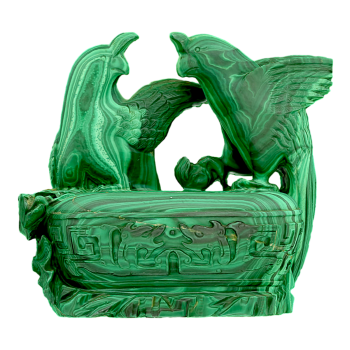
Asian Oriental Ceramic Pattern Decorative Bottle

Qing Dynasty Qianlong period vase "Carving Peacock Stone Vase"

Qing Dynasty Qianlong period vase "Carving Peacock Stone Vase"

The Qianlong seal is located within the square border on the bottom. In the form of a water basin decorated with character patterns and dragons, surrounded by flower branches.